
The Milk Illusion: Rethinking Our Relationship with the White Drink
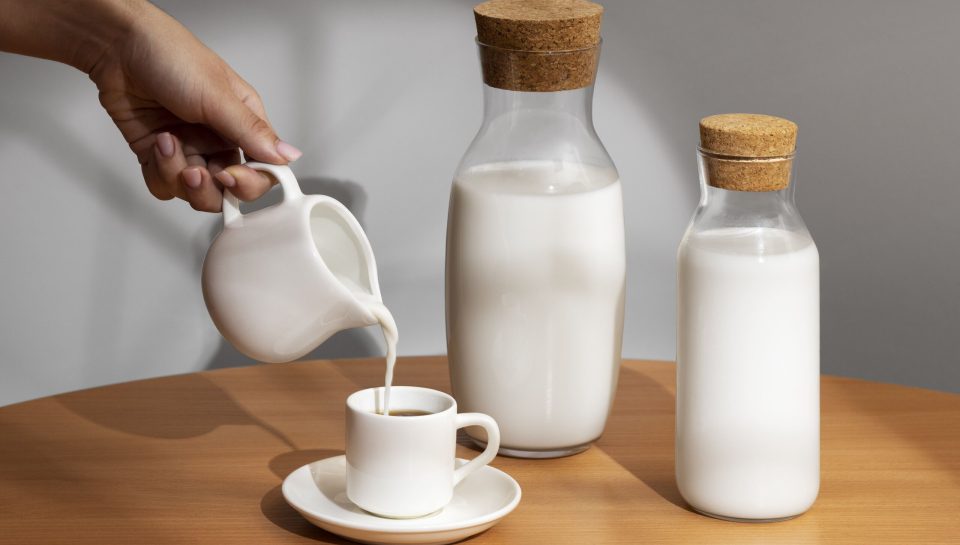
For generations, milk has been presented as nature’s perfect food. It was poured into our childhood cups, stirred into chai, and woven into festivals and family rituals. We were told it builds strong bones and completes a meal.
Yet modern understanding invites us to look at milk a little more closely — not with fear, but with curiosity. For many adults, milk may not be as easy on the body as we once believed.
Milk and the Human Digestive System
Milk is nature’s first food, designed for the newborn. In infancy, the digestive system produces specific enzymes that allow milk to be curdled, broken down, and absorbed efficiently.
As we grow and begin to eat solid food, the production of these enzymes gradually decreases. Many adults produce much less rennin (which helps digest milk proteins) and lactase (which breaks down milk sugar).
When these enzymes are low, milk is not fully digested. It can lead to bloating, heaviness, acidity, or mucus formation — signs that the body is struggling to process it.
This does not mean milk is “bad.” It simply means that the adult body may no longer be designed to rely on it in the same way as in childhood.
Modern Milk and Inflammation
The milk available today is very different from what earlier generations consumed. Commercial dairy often contains higher levels of growth factors and proteins that can influence the human system.
In some people, these may:
• Increase inflammatory responses
• Influence insulin sensitivity
• Contribute to hormonal imbalances
• Worsen conditions such as acne, sinus congestion, joint discomfort, or fatigue
These effects vary from person to person, but they are part of why many adults feel uneasy after drinking milk.
Milk and Metabolic Health
For those dealing with conditions like PCOS, fatty liver, diabetes, or weight gain, milk can sometimes make regulation more difficult.
Certain components in milk can:
• Stimulate insulin release
• Interfere with how cells respond to insulin
• Encourage fat storage in the body
Even low-fat or skimmed milk contains these biological signals, because they come from the milk itself — not from its fat.
The Gut’s Role
A healthy gut is essential for digesting any food. Many Indian adults gradually lose the ability to digest lactose, leading to bloating, gas, or discomfort after milk.
Pasteurization and homogenization also remove many natural enzymes and bacteria from milk, making it harder for the gut to process.
When the gut is already weak or inflamed, milk can add to the burden rather than bring nourishment.
Rethinking Calcium and Bones
Milk has long been promoted as the primary source of calcium. Yet research has shown that high milk consumption does not always translate into stronger bones.
The body maintains a careful balance of minerals. Certain foods, including milk, can create a mild acidic effect, which the body neutralizes using calcium from its own stores.
Traditional Indian foods such as ragi, sesame seeds, moringa, curry leaves, amaranth, and small fish provide calcium in forms that the body often uses more gently.
Listening Beyond Nostalgia
For many of us, milk carries emotion — the warmth of childhood, the comfort of payasam, the quiet ritual of chai.
There is nothing wrong with these memories. But the body changes with time, and what once suited us may no longer feel the same.
Health grows when we listen not just to tradition, but to how our body responds now.
A More Gentle Way Forward
Rather than rejecting milk completely, it can help to notice how it affects you:
• If milk causes heaviness, sinus, or fatigue, it may be worth pausing
• Fermented forms like curd, buttermilk, and ghee are often easier to tolerate
• Calcium can be drawn from many plant-based and traditional sources
• Mixing milk with certain foods (fish, citrus, spicy meals) can strain digestion
There is no single rule — only what your body quietly tells you.
Milk is not an enemy. But for many adults, it is no longer the effortless nourishment it once was.
Health does not come from what society insists is “perfect.”
It comes from listening carefully to what your own body feels after each choice.
Sometimes, the most caring thing we can do is to let go of what no longer serves us — even if it once did.